
What is wrought iron?
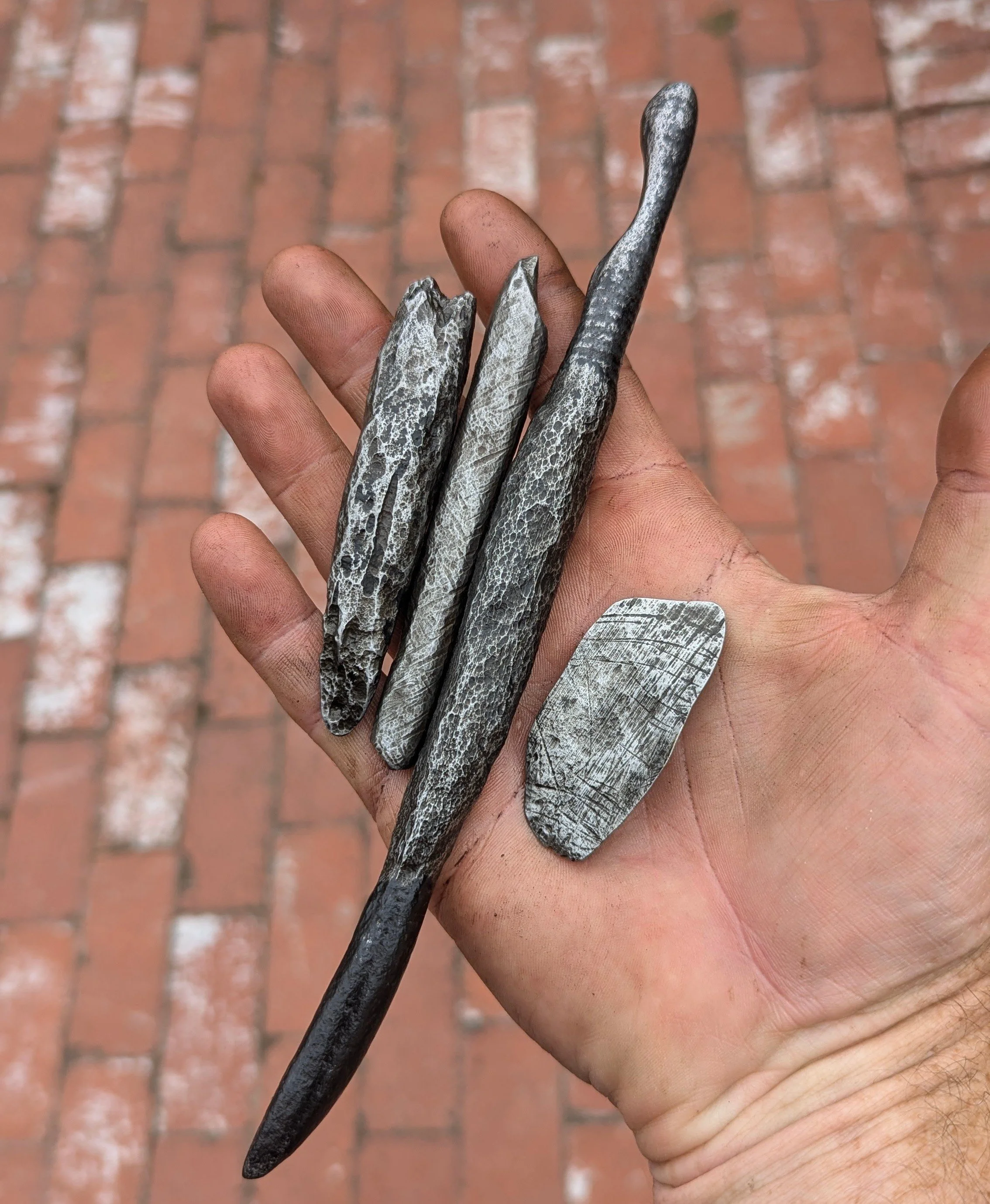
Wrought iron commonly refers to a style of ornamental metal objects such as railings, gates and outdoor furniture that are made by blacksmiths. However these modern wrought iron objects are often made with modern mild steel instead and not authentic wrought iron.
The objects represented on this website, and that use is describing wrought iron as a material, specifically a metal that has very low carbon content and trace silica that has been worked, or “wrought” into the stock dimensions used by blacksmiths and builders for millennia.
The process of making wrought iron is very labor intensive and commercial production stopped globally in the 1960’s. There may be small artisan foundries that produce it but it’s extremely expensive and usually made for important restoration work if scrap wrought iron is not available.
The specific qualities of wrought iron that made it and still make it a treasures material to blacksmiths are it’s ductility (flexibility) and it’s corrosion resistance. All of the objects for sale could theoretically be reforged into new objects by a blacksmith, in fact most of the
Mild steel is made in massive industrial foundries using modern techniques designed to recreate the specific qualities of prior methods but much more economically.
If you held these objects in your hand it would immediately become apparent that they are powerful.
Etched in salt water for decades, these discarded bits of industrial hardware transformed from useful to powerful.
The history of wrought iron goes back millennia as the main type of iron used everywhere until the early 1900’s. “Wrought” means worked, or metal that was pounded or “forged” into itself with trace amounts of silica introduced in the “bloomery” foundry process. The silica when pounded into the iron is elongated and creates a fibrous grain structure that is similar to wood. This specific grain structure provides corrosion resistance, ductility or the absence of brittleness and strength. These characteristics meant the material was well suited to be forged by blacksmiths. While not completely corrosion resistant, the grain structure focuses the corrosion making them naturally sculpted works of art. I see these objects as twice worked or wrought wrought, first as a piece of industrial hardware, then discarded into a corrosive environment that worked the, into what you see today.
What do I do with it?
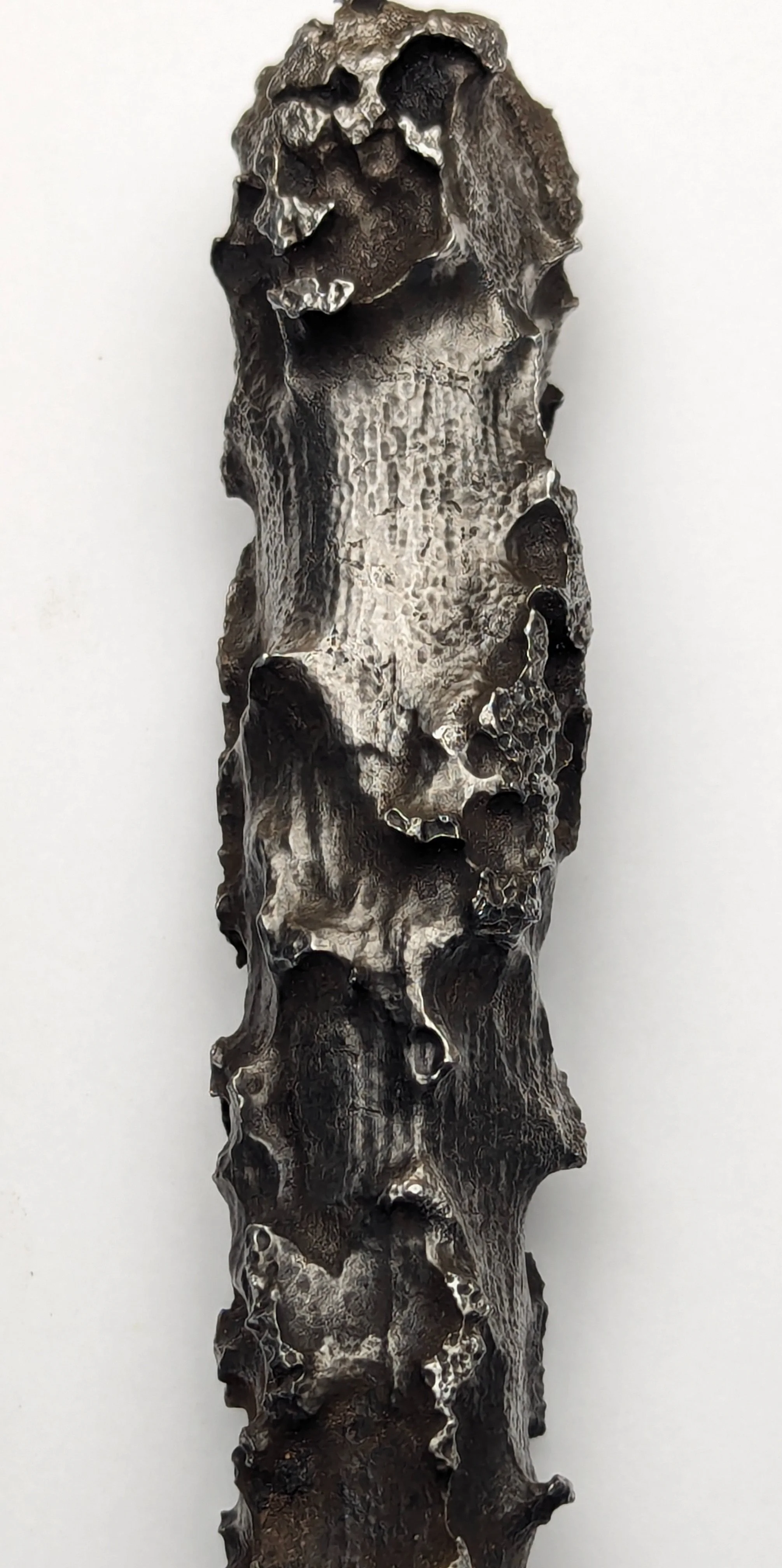
History, texture, power, rarity, science, materiality and permanence blend together in a hefty tactile object that must be held in your hand to fully appreciate. In fact our hands natural skin oils help protect it from further corrosion. Placing it on your desk allows its naturally sculpted palpability to be enjoyed in a moment of contemplation or shared with clients and colleagues as a striking piece for discussion.
It’s possible history, texture characteristics, original purpose, weight and dimensions will be graded and provided on a card with each unique purchase.
Contact us
Interested in working together? Fill out some info and we will be in touch shortly. We can’t wait to hear from you!